HOME
House Maintenance Checklist: What to Do Every Season (and What It Saves You)
FFrameNestStudios Team · Nov 15, 2026

A furnace filter costs about twelve dollars and takes maybe four minutes to swap out, no tools needed. Skip it for a year or two, though, and the story changes. The filter clogs, the blower works twice as hard, and one cold morning the furnace just gives up. Now you are paying an emergency callout fee plus a repair bill that can run past $900, all because of a $12 part.
That is house maintenance in a nutshell. The jobs are small, cheap and honestly a bit boring. The repairs that follow when you skip them are none of those things. This guide walks you through what to do each season, plus the once-a-year jobs almost everyone forgets.
What Is a House Maintenance Schedule?
A house maintenance schedule is simply a list of small upkeep jobs matched to the time of year when they matter most. Gutters get cleaned after the leaves fall. The air conditioner gets checked before the first heatwave, not during it. Instead of reacting to breakdowns, you catch problems while they are still cheap.
You do not need to be handy either. Most of what follows needs a ladder, a screwdriver and a free Saturday morning at most.
Spring: Wake the House Up After Winter
Spring is about undoing winter damage and getting ready for rain and heat. Work through this home maintenance checklist before the weather turns warm.
- Clean the gutters and downspouts. Winter leaves behind twigs, grit and soggy leaf sludge. Clogged gutters spill water down your walls and into the foundation, a far bigger bill than a ladder and a bucket.
- Check the roof from the ground. Look for curled, cracked or missing shingles after storms. Anything lifted or patchy is worth a roofer's opinion now, not after a leak stain appears on the ceiling.
- Service the air conditioner. Clear debris from the outdoor unit, rinse the coils with a hose and change the filter. A spring tune-up costs far less than a July breakdown call.
- Test every smoke and carbon monoxide alarm. Press the test button, swap batteries if they chirp, and check the expiry date on the back, since most alarms are done after ten years.
- Inspect window and door seals. Cold weather shrinks and cracks caulk. Resealing a window takes ten minutes and keeps cooled air inside where you are paying for it.
- Check the attic and basement for damp. Look for dark patches, musty smells or small puddles. Early mould is a wipe-down job, late mould is a contractor job. While you are at it, flush the outdoor taps, since a pipe that split over winter often only shows itself when the water goes back on.
Summer: Heat, Storms and Outdoor Jobs
Summer maintenance is lighter indoors and busier outside, protecting the house from heat, heavy rain and pests while the weather is on your side.
- Clean or replace HVAC filters every one to three months. This is the $12 job from the start of this article. Set a phone reminder, because nobody remembers filters on their own.
- Check the deck, patio and fences. Look for loose boards, raised nails and soft, spongy wood. Sealant every couple of years beats rebuilding a rotted deck.
- Inspect the driveway and paths for cracks. Small cracks let in water, which freezes later and splits them wider. Filling one now is a tube of sealant, fixing a heaved slab is not. While you are out there, trim back any branches touching the roof or siding, since they rub off protective surfaces and give insects a bridge indoors.
- Test the sump pump if you have one. Pour a bucket of water into the pit and watch it kick in. Summer storms are exactly when a dead pump floods a basement, so find out now.
- Clean the range hood filter and bathroom exhaust fans. Grease and dust build up quietly, fans get noisy and weak, and a greasy filter is a fire risk nobody thinks about. While you are outside, check for ant trails, wasp nests under the eaves and gaps where pipes enter the house, all easier to deal with now than in September.
Autumn: The Most Important Season of All
If you only follow one part of this schedule, make it autumn. Fall jobs are what stand between your house and winter damage.
- Clean the gutters again. Yes, again. This is the single most skipped job on any yearly home maintenance list, and overflowing gutters in winter lead to ice dams and water inside walls.
- Get the heating system serviced. A furnace or boiler check before the first cold snap covers the burners, flue and safety controls, and puts you ahead of the emergency-call queue.
- Drain and shut off outdoor taps. Disconnect hoses, drain the lines and close the inside shut-off valve. A burst outdoor pipe can pour water into a wall cavity for weeks unnoticed.
- Seal gaps around windows, doors and pipe entries. A tube of caulk and some weatherstripping will do most houses. You will feel it on the first windy night, and so will your heating bill.
- Sweep the chimney if you burn wood. Creosote build-up is a genuine fire risk, and birds and debris find chimneys surprisingly welcoming.
- Check the roof once more. Autumn storms loosen what summer heat baked brittle. Loose flashing around chimneys and vents is a classic leak starter.
- Rake leaves off the lawn and clear drains. Matted leaves kill grass and block the drains that carry water away from your foundations.
Winter: Small Checks, Big Protection
Winter is mostly about watching, checking and preventing freeze damage.
- Keep an eye on pipes in cold spots. Pipes in unheated basements, garages and exterior walls can freeze and burst. Insulating sleeves are cheap, and on the coldest nights a slowly dripping tap keeps water moving.
- Check for ice dams after heavy snow. Thick ridges of ice at the roof edge push meltwater under shingles. Good attic insulation prevents most of them.
- Test your alarms again and check the fire extinguisher. Heating season is fire season. Make sure the gauge sits in the green and everyone knows where it lives. While you are up on the step stool, flip the little switch on your ceiling fans so they turn clockwise and push warm air back down.
- Top up the emergency basics. Torch batteries, a working flashlight per floor, and knowing exactly where your main water shut-off valve is. The time to learn that is not during a burst pipe. Keep an eye on window condensation too, since constant moisture feeds mould in corners and closets.
The Once-a-Year Jobs Everyone Forgets
Some tasks belong to no season in particular. Pick a month, any month, and do these once a year.
- Flush the water heater. Sediment settles in the tank, makes it rumble, wastes energy and shortens its life. A yearly flush keeps it quiet and efficient.
- Clean the dryer vent properly. Not just the lint trap, the whole duct run to the outside. Lint build-up is a common cause of house fires, and a clogged vent doubles drying times.
- Have the chimney inspected. An annual look inside catches cracked liners and blockages you cannot see from below.
- Deep clean behind the fridge and check its coils. Dusty coils make the motor work harder, and the ice maker water line is worth a look for slow drips.
- Test your main water shut-off and breaker panel. Valves that never move can seize solid. Turn them once a year so they work on the day you really need them. Then do one slow lap of the whole house, phone in hand, noting every crack, stain, drip and wobble. That is how next season's list writes itself.
What Skipping Maintenance Actually Costs
Nobody can quote your exact repair bill, but the pattern below holds true almost everywhere in the US. Treat these figures as rough estimates, not quotes.
A full year of basic upkeep costs less than a single one of those repairs. That is the whole argument for keeping a schedule.
Common Mistakes That Cost Homeowners Money
Only fixing things when they break. This is the most expensive way to own a house. Emergency callouts cost more, and one failure often damages something else on its way out. A split pipe means a plumbing bill plus flooring, drywall and paint.
Keeping no record of anything. When was the roof last checked? How old is the water heater? Has that crack grown since spring? If it all lives in your head, half of it is already forgotten. This is where a home maintenance tracker earns its keep, because written dates and costs stop the guesswork.
Forgetting the boring exterior jobs. People remember kitchens and bathrooms. They forget gutters, grading, caulk and soil sloping toward the foundation instead of away from it. Water sits behind most expensive home repairs, and nearly all start outside with a twenty-minute job.
Doing everything in one exhausting weekend. Then never again for two years. Maintenance works like exercise: a little, regularly, on a rhythm you can keep.
Frequently Asked Questions
How often should you do house maintenance?
Most tasks fall into a rhythm: filters and alarm checks every one to three months, a focused checklist each season, and a handful of bigger jobs once a year. Spread out, that is a few hours per season, not one miserable marathon weekend.
What is the most important home maintenance task?
If you forced most home inspectors to pick one, they would say water management. Clean gutters, sealed gaps and soil that drains away from the house. Water causes more expensive damage than everything else on the list combined, and nearly all of it is preventable.
How much should you budget for home maintenance each year?
A common rule of thumb is to set aside roughly 1% of your home's value per year. A $350,000 house means about $3,500 a year, though quiet years roll the money over to the year the roof or furnace needs real attention. Having the pot there turns emergencies into errands.
Can I track home maintenance in a spreadsheet?
Yes, and plenty of homeowners do. A simple sheet with the task, the date done, what it cost and when it is due next covers most of what you need.
Keep Every Job, Date and Cost in One Place
You can run all of this from a notebook or a notes app. The problem is remembering in October what you did in April, what the plumber charged, and whether the furnace is three years old or six.
That is why we built our Home Maintenance Tracker spreadsheet. It gives you a season-by-season checklist, space to log every job with its date and cost, and a clear view of what is due next, in one file for Excel and Google Sheets. No subscription, no account, just a spreadsheet you own, available as an instant download on Etsy.
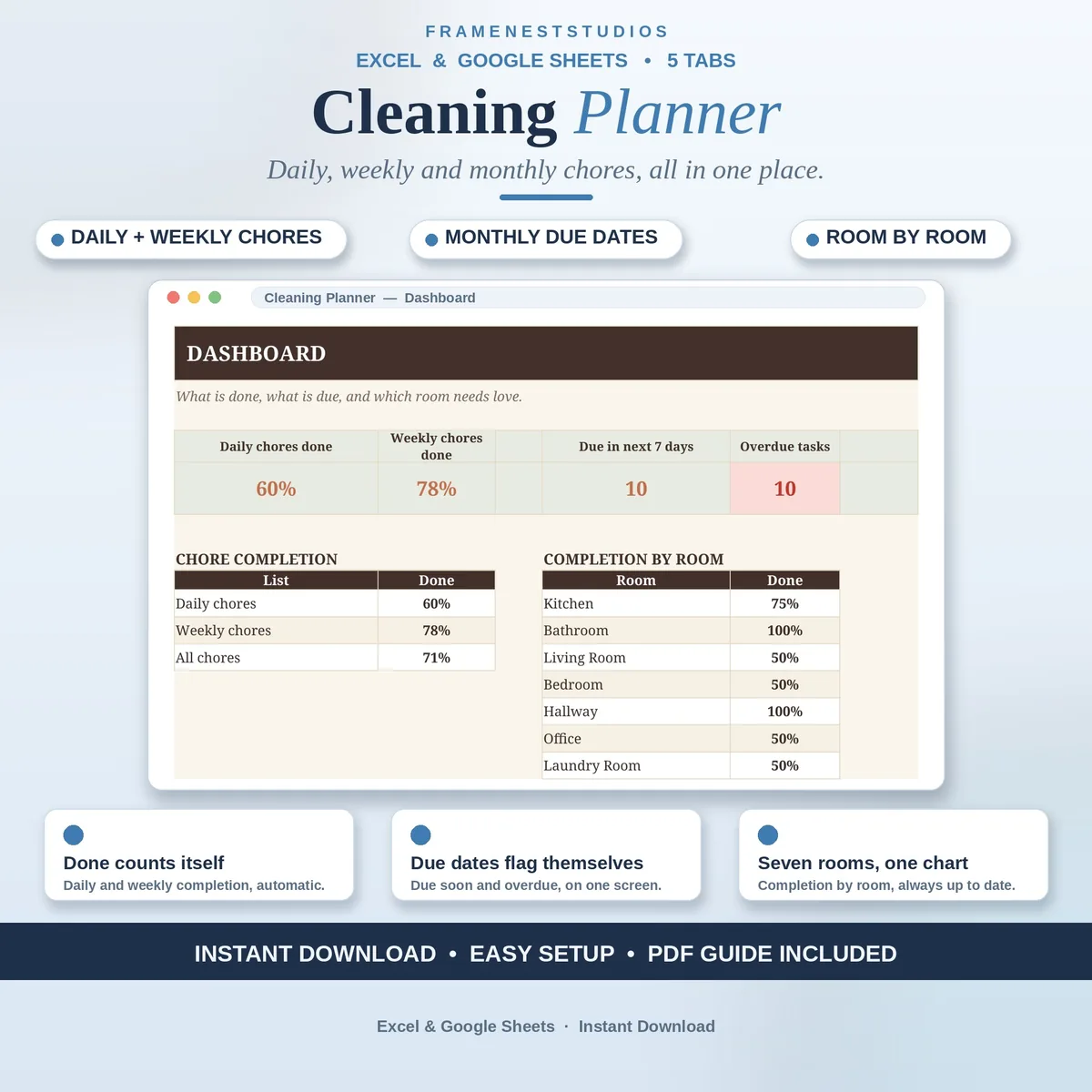
Short on time? The Cleaning Planner does this for you in Excel and Google Sheets.
Print the seasonal lists, stick them inside a cupboard door, and work through them a few at a time. Your house does not need perfection, just a little attention four times a year.