December is the month that breaks budgets. The gifts alone would be enough, but then the car insurance renewal lands in the same week, and somebody in the family has planned a trip you somehow agreed to months ago. Three big costs, one paycheck. Sound familiar?
None of those bills were a surprise. You knew the insurance renews every year. You knew December was coming. They only felt like emergencies because the money was never set aside for them. That is exactly the problem sinking funds fix.
A sinking fund is money you save a little at a time for a cost you already know is coming. You pick the bill, work out what it will cost, and put away a small amount every month until the date arrives. When the bill shows up, the money is sitting there waiting, and your normal month carries on as if nothing happened.
The difference between this and an emergency fund is simple. A sinking fund covers planned costs. An emergency fund covers surprises. A new set of tires you knew were wearing thin? Sinking fund. A blowout on the highway at midnight? That one is an emergency.
You do not need all ten. These are the ones that cause the most budget pain for most households, so pick the ones that match your life.
Not ten. Three. Choose the bills that hurt the most last year, the ones that sent you to a credit card or wiped out your savings. You can add more funds later, once the first three feel automatic.
For each fund, write down two things: how much the bill usually costs and when it lands. If you are not sure, check last year's bank statements. Close enough is fine. You are aiming for a sensible target, not a perfect guess.
This is the whole maths of the system. Yearly cost divided by the months until it is due gives you the monthly amount. The example table below shows how it works for three common funds.
Set up a standing transfer for the day after payday, even if each fund only gets a small amount. Automation matters more than the size. Money you have to remember to move is money that gets spent on something else by the 20th of the month.
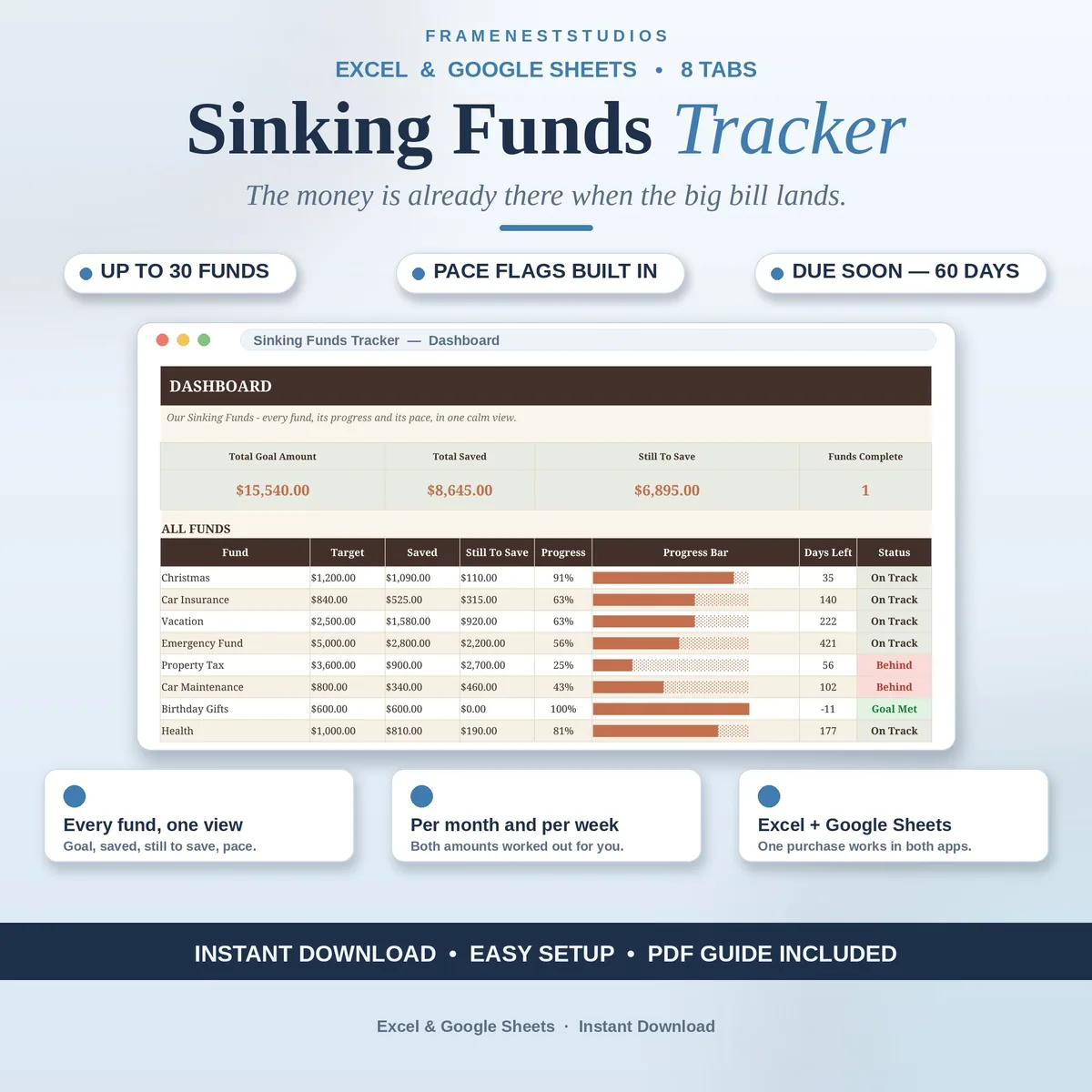
Every fund needs its own running total, so you always know what the car fund holds versus the gift fund. A simple sinking fund tracker spreadsheet does this well. You update it once a month, and it shows each pot, its target, and how close you are. No guessing, no digging through bank statements.
Here is what three starter funds look like side by side.
| Fund | Target | Months to save | Monthly amount |
|---|---|---|---|
| Car insurance premium | $1,200 | 12 | $100 |
| Holiday gifts | $900 | 10 | $90 |
| Home repairs | $1,800 | 12 | $150 |
| Total | $3,900 | $340 |
That $340 a month covers $3,900 of bills that used to arrive as nasty surprises. Instead of one brutal December and two expensive repairs, you get twelve ordinary months. The bills did not get smaller. They just stopped being emergencies.
Notice the gift fund runs over 10 months, not 12. If you start in February, December is 10 months away, so the monthly amount is a little higher. Starting earlier is the cheapest way to make any fund feel lighter.
There are two common ways to hold sinking fund money, and both work.
One savings account, tracked separately. All the funds sit in a single high-yield savings account, and your tracker keeps the running total for each one. Simple, tidy, and your money earns a bit of interest while it waits.
Separate accounts. Some banks let you open several savings accounts or use built-in pots and buckets. Each fund gets its own home, so the balances are visible at a glance.
Pick whichever you will actually keep up with. The account setup matters far less than the tracking. Money that is mixed in with your everyday spending, with no record of what it is for, tends to quietly disappear.
Yes, and they do different jobs. The emergency fund is for costs you cannot predict: losing work, a medical bill, a breakdown that comes out of nowhere. Sinking funds are for costs you can see coming months away.
Keeping them separate protects both. If the holiday gifts come out of the emergency fund every year, there is nothing left when a real emergency turns up. And if a planned bill keeps raiding your monthly budget, you never build the emergency fund at all. Start with a small emergency cushion if you do not have one, then add your first few funds alongside it.
Starting with 12 funds at once. It feels organised for about a week. Then tracking twelve tiny pots becomes a chore, you fall behind, and the whole system gets abandoned. Three funds, done well, beat twelve funds done badly.
Setting amounts so big the plan collapses. If the monthly total makes normal life impossible, you will raid the funds or quit by month three. Start smaller than you think you need to. A fund that reaches 80 percent of its target still turns a crisis into a minor annoyance.
Dipping into a fund for something else. The car fund is not a pizza fund. The moment one pot becomes general spending money, you stop trusting the numbers, and the system unravels. If a real emergency hits, use the emergency fund. That is what it is there for.
Start with three, covering the bills that caused you the most stress last year. Once those run on autopilot for a few months, add one or two more. Most households settle somewhere between five and eight.
General savings has no specific job. A sinking fund is savings with a name, a target and a date attached. That label is the point. Money with a job gets left alone. Money without one gets spent.
A savings account you can reach within a day or two, separate from your everyday spending account. High-yield accounts are a good fit because the money sits for months at a time. Keep it out of investments. These bills are too close and too certain for that.
Yes, and arguably they help more on a tight income, because a big bill hurts more when there is no slack. Start with one fund and a small amount, even $20 or $30 a month. A half-funded bill is far easier to handle than a bill you have saved nothing for.
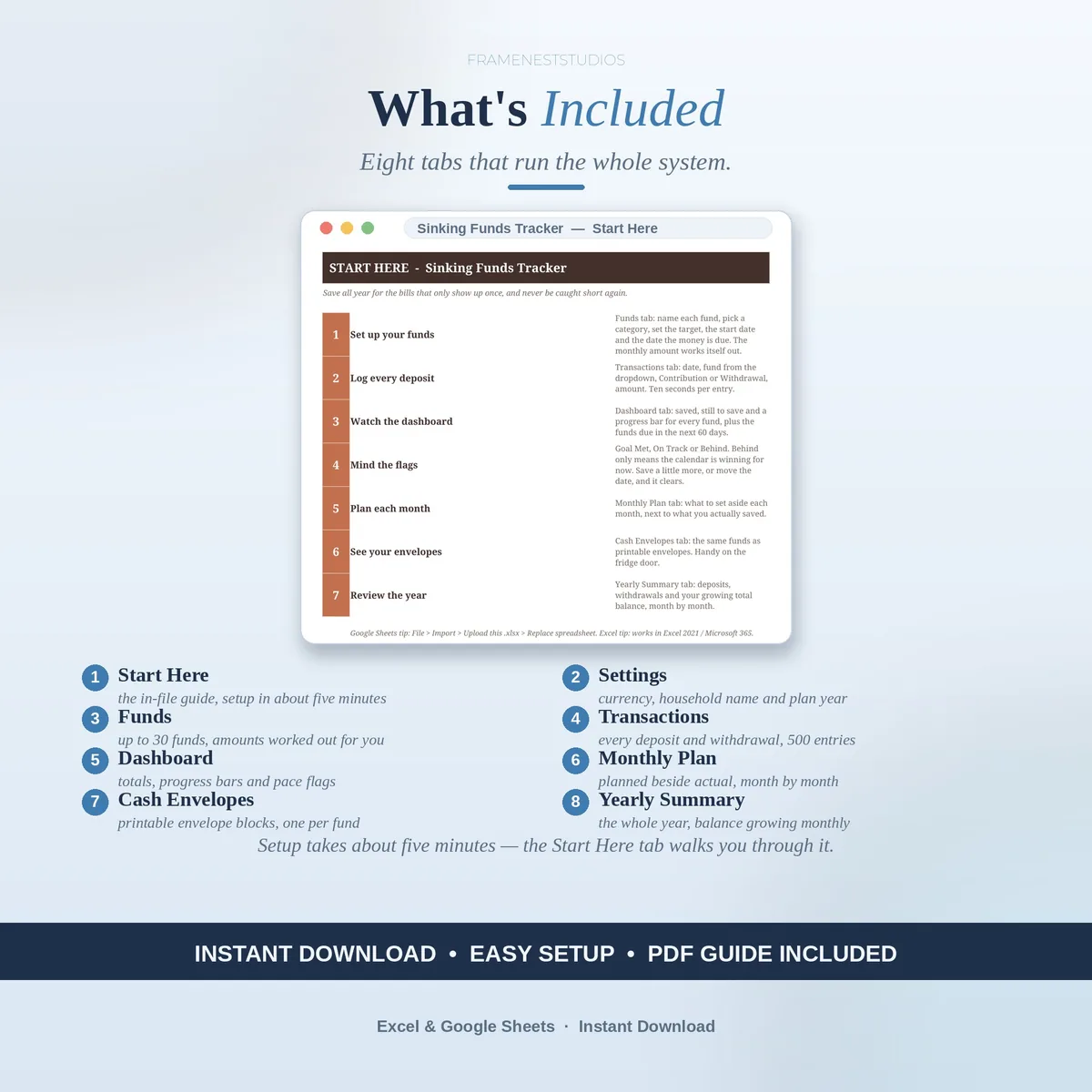
The system works when the tracking is easy. Our sinking fund tracker and budget planner spreadsheets are built for exactly this: one row per fund, targets and dates set once, monthly amounts worked out for you, and a clear view of what each pot holds. They work in Excel and Google Sheets, and you can download them instantly on Etsy and start today.
Short on time? The Sinking Funds Tracker Spreadsheet does this for you in Excel and Google Sheets.
Set up your first three funds this week. Future you, standing in December with the insurance paid and the gifts covered, will be very glad you did.
Save a little each month for big yearly bills, with pace flags and progress bars. See every screen, the full tab list and buyer questions on the product page.
See the Sinking Funds Tracker Spreadsheet
Or browse more Savings Investing & Retirement templates.