Author: FrameNestStudios Team
You got engaged last week. There was champagne, happy tears, and about four hundred photos of the ring. Now it is Tuesday, the excitement has settled into something quieter, and you are staring at a list of roughly 150 decisions with no real idea where to start.
Take a breath. Every couple feels this. The trick is not doing everything at once, it is doing the right things in the right order. That is exactly what a good wedding checklist does for you. It turns one giant, slightly terrifying project into small monthly chunks you can actually finish.
A wedding checklist is simply a written list of every task involved in planning a wedding, arranged in the order it needs to happen, usually starting about 12 months before the day. Below is the full timeline I walk couples through, from the first budget conversation to the morning of the wedding itself.
This is the stage everyone wants to skip, because booking a dream venue feels more fun than talking about money. Do not skip it. Almost every planning headache I hear about traces back to couples booking things before they knew what they could spend.
Before anything gets booked, sit down together and set a total number you are both comfortable with. Then split it into rough chunks. For most weddings, the big three costs eat up the largest share:
Once the budget exists on paper, the rest of this stage gets easier:
With a budget and a rough guest list in hand, you can start signing contracts. The vendors with the least availability go first.
A small tip from experience. Get every quote in writing, and note the deposit amount and the date the balance is due in the same place. Six months from now you will not remember which florist quoted what, no matter how sure you feel today.
The skeleton of the wedding is in place. Now you fill in the parts your guests will actually see and taste.
This is the unglamorous middle stretch, and it matters more than people think. Most of the tasks here are small, cheap to do early, and stressful to do late.
Things start to feel real around now. Invitations go out, final numbers begin to form, and your wedding to do list shifts from booking to confirming.
One month out. The big decisions are done, and this stage is about tying threads together so nothing depends on your memory during the busiest week of your life.
Very few couples split planning exactly in half, and that is fine. What works better is splitting by strength and by interest. One of you might be a natural with spreadsheets and vendor emails. The other might care deeply about the music and the food. Divide along those lines and both of you will enjoy it more.
Two habits help almost everyone. First, a short weekly check-in, even fifteen minutes over coffee, where you look at the list together and pick the next two or three tasks. Second, one shared place where everything lives. Quotes, contracts, the guest list, the budget, the timeline. The fastest way to start an argument during wedding planning is two people working from two different versions of the numbers.
Booking vendors before setting a budget. A couple falls for a venue, signs, and then discovers the venue alone eats 70 percent of what they can spend. Every later decision becomes a compromise. Budget first, bookings second, always.
Forgetting marriage license timing. Licenses have rules. Some places make you wait a few days after applying before you can marry, and most licenses expire after a set number of days. Apply too early or too late and you have a legal problem, not just a paperwork problem. Check your local rules at the start, not the end.
No day-of contact list. On the day, something small will go sideways. A cake arrives at the wrong entrance, a car goes to the wrong address. If every vendor's number lives only in your email, you become the call centre at your own wedding. One printed list, held by one calm person, fixes this.
Trying to do the final week alone. Couples often refuse help because they want everything done their way. Then they spend the night before the wedding tying ribbons at 1 a.m. Hand jobs out early. People genuinely like being asked.
Most couples start 12 to 14 months before the date, which is why a 12 month wedding timeline works so well. If your engagement is shorter, do not panic. Just work through the same list in a tighter order, booking the venue, photographer, and catering first because they run out of dates fastest.
It varies a lot by country, city, and guest count, so treat any single average with suspicion. What matters more is your number. Set a total you can afford without starting married life in debt, then split it across the venue and catering, photography, attire, and the smaller items. A written budget you check monthly beats a national average every time.
The venue, because the venue sets your date, and your date drives everything else. After that, book the vendors who can only do one wedding per day, like your photographer, band or DJ, and planner. Cakes, flowers, and rentals usually have more flexibility.
No, plenty of couples plan the whole thing themselves with a good checklist and a simple budget tracker. A planner earns their fee most on the day itself and during the final month. If your budget is tight, a month-of coordinator is a middle option many couples are glad they chose.
Here is the honest truth about checklists. The task list is the easy part. The part that quietly gets couples into trouble is the money, because costs arrive in pieces. A deposit here, a balance there, a small extra that seemed harmless at the time. By month six, nobody is quite sure what has been spent or what is still owed.
That is why we made our wedding budget planner spreadsheet to sit alongside a timeline like this one. It tracks your total budget, what each vendor costs, deposits paid, balances still due, and due dates, all in one sheet that works in Excel and Google Sheets. You fill it in as you book, and it shows you in plain numbers whether you are on track or drifting. It is an instant download on Etsy, so you can start with it today, right at the top of this timeline where the budget belongs.
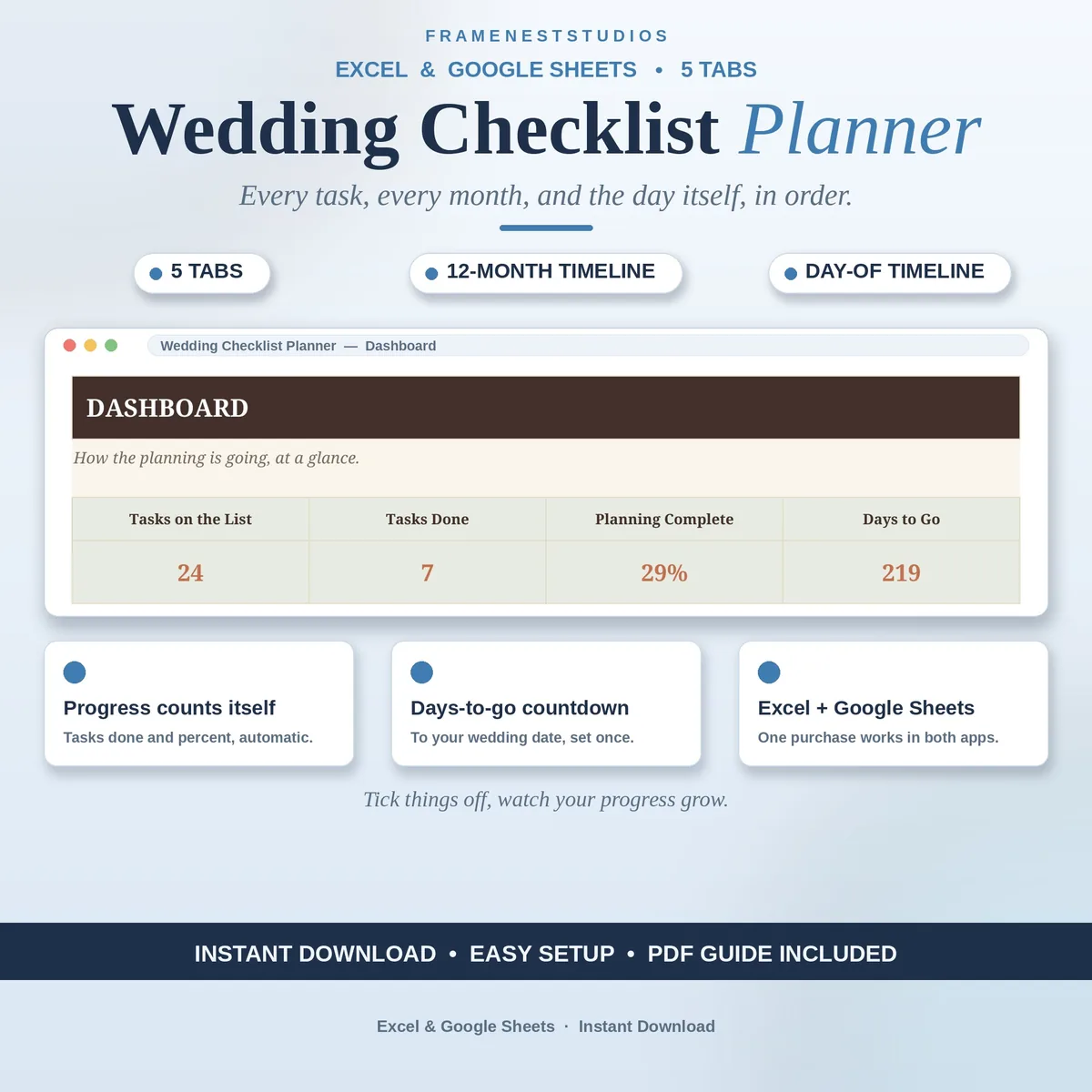
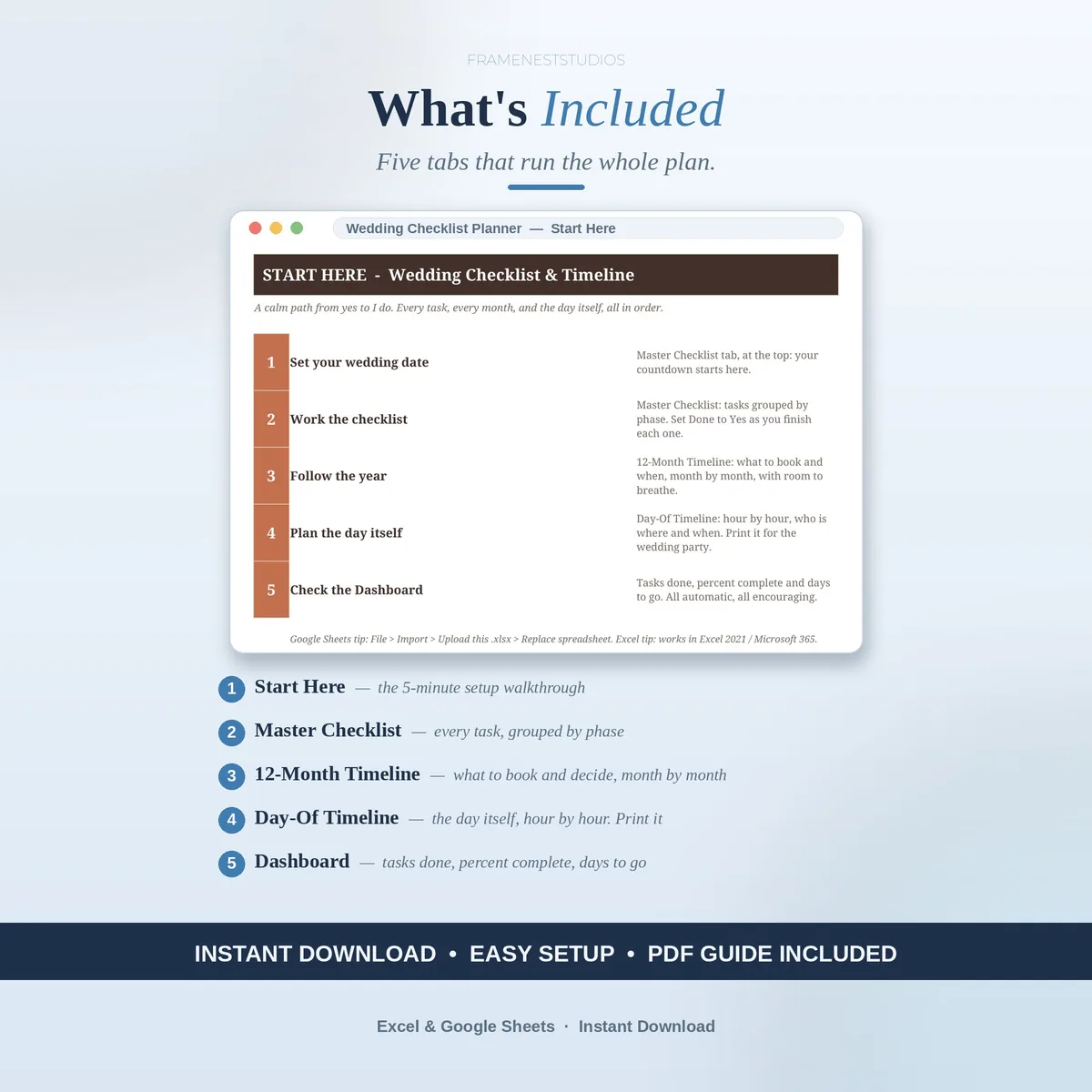
Short on time? The Wedding Checklist Planner does this for you in Excel and Google Sheets.
Print the checklist, set the budget before you book a single thing, and work through one section at a time. Twelve months sounds long. It goes quickly, and it is a lot more fun when the list is doing the worrying for you.
Every wedding task in the right order, month by month, with a day-of timeline. See every screen, the full tab list and buyer questions on the product page.
See the Wedding Checklist Planner
Or browse more Wedding templates.