It usually starts with something small. The car makes a noise it has never made before, the mechanic says a number with three zeros in it, and out comes the credit card. You tell yourself you will pay it off next month. Then next month the washing machine joins in, the card balance grows instead of shrinking, and before long you are paying interest on a repair you barely remember.
An emergency fund is what breaks that cycle. It is not exciting. It will never be the most interesting money you own. But it is the money that turns a bad week into an annoying week instead of a six month debt.
This guide covers how much you actually need, where to keep it, and how to build one on a normal income without living on plain rice.
An emergency fund is a pot of cash, kept separate from your everyday money, that exists for one job only: covering a genuine emergency without borrowing.
That word "genuine" matters. A real emergency is something unexpected, urgent, and necessary. Losing your job counts. A car repair you need to get to work counts. A medical bill, a broken boiler in January, a leaking roof, those count too.
Plenty of things feel urgent but are not emergencies. A flash sale is not an emergency. A holiday is not an emergency, even a really good deal on flights. Concert tickets, a new phone because yours feels slow, a birthday gift you forgot to plan for, none of these qualify. Those are predictable spending, and predictable spending belongs in your normal budget, ideally in small sinking funds you top up monthly.
Keeping that line clear is half the battle. The fund only works if it is still there on the day something actually goes wrong.
Ask ten people and you will get ten answers, because the honest answer depends on your life. A useful way to think about it is in tiers. You do not jump straight to the top tier. You climb.
The starter emergency fund is $1,000, or whatever covers your most common small disaster. For most households that is a car repair, a replacement appliance, or an insurance excess. This first $1,000 is not meant to cover job loss. It is meant to stop small problems going on a credit card while you work on everything else.
If you have high interest debt, this tier is usually where you pause. Get the $1,000 in place, then attack the debt, then come back and keep building.
Next stop is one month of core expenses. Core expenses are the bills that keep life running: rent or mortgage, utilities, food basics, transport, insurance, minimum debt payments. Not the full lifestyle, just the skeleton of it.
For a dual income household where both jobs are stable and unrelated, one month might be a comfortable resting point for a while. If one income stopped, the other still covers a lot. For a single income household, treat this tier as a waypoint, not a destination.
The full emergency fund is three to six months of core expenses. Where you land in that range depends on how bumpy your income is.
Three months suits a dual income couple with steady jobs, low fixed costs, and family nearby who could help in a real crisis. Six months suits freelancers and anyone self employed, because your income can drop without warning and there is no employer sick pay behind you. It also suits single income families, people in industries where jobs take a while to replace, and anyone whose core expenses are high and hard to cut quickly.
If you are freelance, be honest with yourself here. Your slow months are predictable even if the exact timing is not. A bigger fund is not pessimism, it is how you give yourself breathing room.
Say your household core expenses come to $3,200 a month. Here is what each target looks like, and how long it takes if you save $250 a month.
| Goal | Target amount | Months saving $250 |
|---|---|---|
| Starter fund | $1,000 | 4 months |
| 1 month of core expenses | $3,200 | About 13 months |
| 3 months of core expenses | $9,600 | About 38 months |
| 6 months of core expenses | $19,200 | About 77 months |
Do not let that last row scare you. Nobody builds a six month fund in a hurry on an average salary, and you do not need it finished before it starts helping. The $1,000 starter fund already changes your life. Each tier after that just buys you more calm.
This is also where a bit of emergency fund calculator thinking helps, and you do not need an actual tool for it. Take your core monthly expenses, multiply by the number of months you want covered, and that is your target. Divide the target by what you can realistically save each month, and that is your timeline. Two sums. That is the whole calculation. Knowing your number, even a rough one, makes the goal feel real instead of vague.
Three rules cover almost everything.
Keep it in a separate account. If the money sits in your everyday current account, it will quietly get spent. Not on anything dramatic, just absorbed into normal life. A separate savings account, ideally at a different bank so you cannot see it every time you check your balance, keeps it out of sight and out of temptation.
Keep it easy to reach. This money needs to be available within a day or two when something goes wrong. An instant access savings account is the classic home for it. A slightly better interest rate is a nice bonus, but access beats rate here. If getting the money out takes a week of forms and phone calls, it is in the wrong place.
Do not invest it. This is the rule people break most often, usually with good intentions. The stock market can drop at exactly the moment jobs get cut, which is exactly when you would need this cash. An emergency fund is insurance, not an investment. Its job is to be there, in full, on your worst month. Boring is the point.
Knowing your target is the easy part. Building the fund on a real income, with real bills, is the actual work. These five steps are how most people I know have actually done it.
Aiming for six months on day one. If your target is $19,200 and you currently have $80 saved, the gap feels hopeless, and hopeless goals get abandoned by February. Start with the starter fund. Hit it. Then one month. Small finished goals beat one giant unfinished one every time.
Keeping it in the everyday account. Already covered above, but it deserves repeating because it is the most common failure. Money that sits next to your grocery money becomes grocery money. Separate account, full stop.
Using it for non-emergencies. Every dip for a sale or a treat makes the fund smaller and the habit bigger. If you keep finding "emergencies" every month, the real problem is usually a missing line in your normal budget, not a lack of discipline. Fix the budget, protect the fund.
Waiting for the perfect month to start. There is no month where saving feels easy. There is always a birthday, a bill, a reason. Start small in an imperfect month and let the automatic transfer do the heavy lifting.
Aim for the top of the range, six months of core expenses if you can. Freelance income arrives unevenly and can stop without notice, so your fund covers both true emergencies and the quiet months between clients. Many freelancers also keep a separate small buffer just for tax, so the emergency fund stays untouched.
The usual order works well for most people: save a starter fund of around $1,000 first, then focus on high interest debt, then return and build the fund up to three to six months. The starter fund matters because without it, the first surprise expense goes straight back on the card you are trying to clear.
In a separate, easy access savings account. You want the money reachable within a day or two, earning whatever interest is available, and not invested in anything that can fall in value. Separate from your everyday account, boring, and available. That combination is the whole answer.
A simple test: was it unexpected, is it urgent, and is it necessary? Job loss, essential car repairs, medical bills, and a broken boiler pass all three. A holiday deal fails the first test, a sale fails all three. If an expense was predictable, it belongs in your monthly budget or a sinking fund instead.
An emergency fund grows slowly, which means motivation has to come from somewhere. Watching the balance climb, tier by tier, is what keeps most people going through month nine when the novelty has worn off.
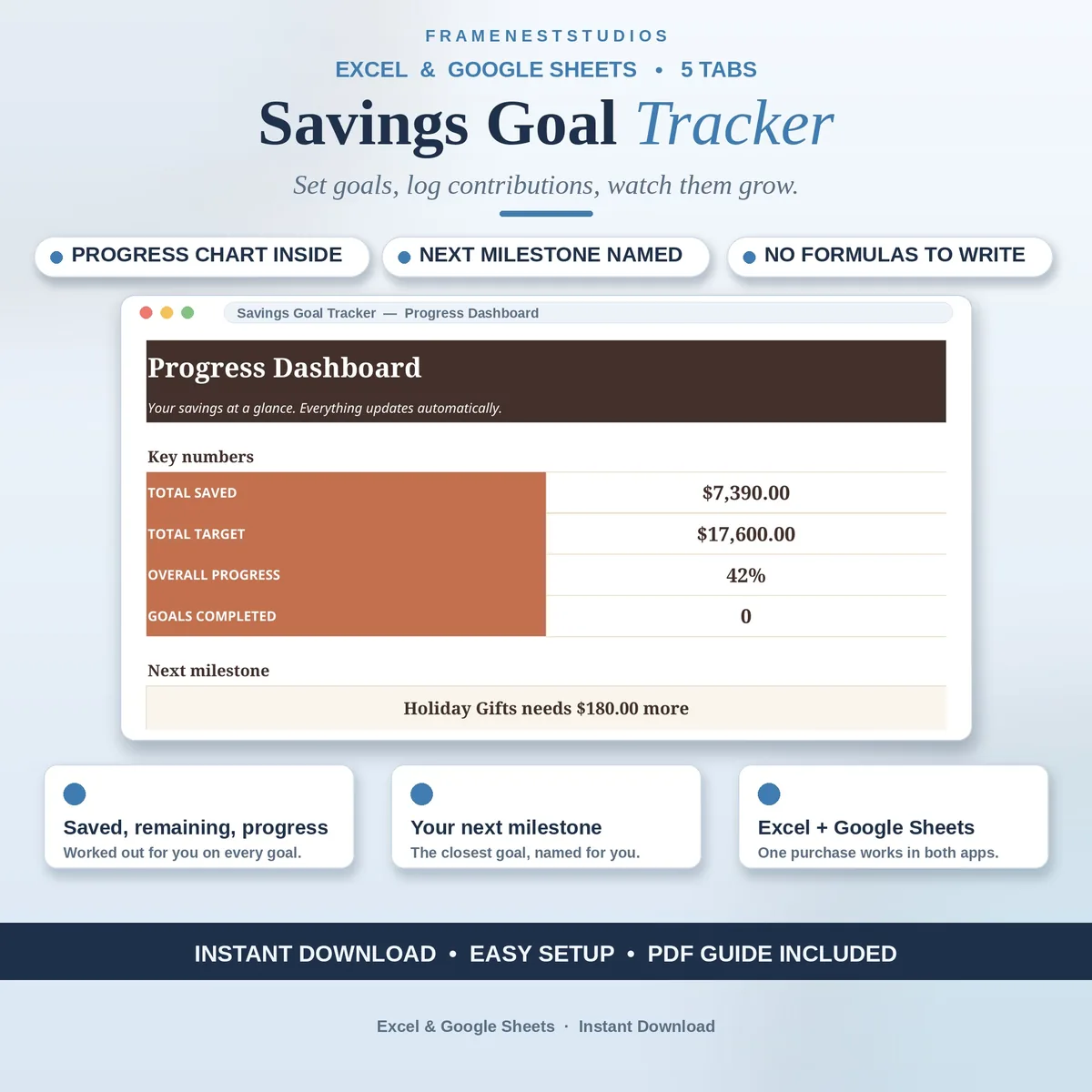
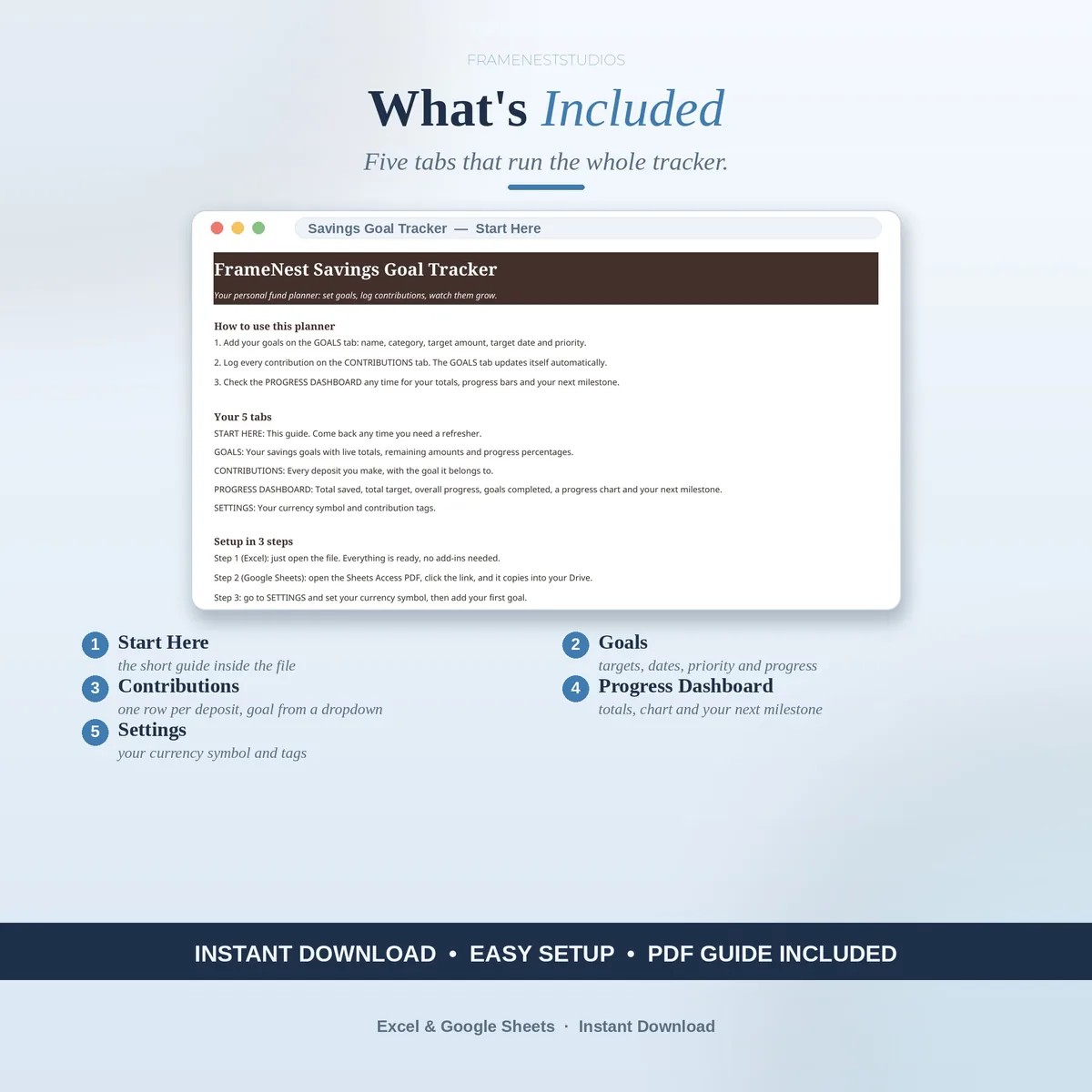
That is exactly what our savings tracker and budget planner spreadsheets are built for. You can log your target, track every transfer in and out, and see at a glance how many months of core expenses you have covered. They work in both Excel and Google Sheets, and they are available as an instant download on Etsy, so you can set yours up today and make the first transfer while the intention is fresh.
Short on time? The Savings Goal Tracker does this for you in Excel and Google Sheets.
Pick your tier, set the payday transfer, and let the boring magic happen. Future you, standing in a garage listening to a mechanic, will be very glad you did.
Set targets for every savings goal, log deposits, and watch progress and milestones grow. See every screen, the full tab list and buyer questions on the product page.
Or browse more Savings Investing & Retirement templates.